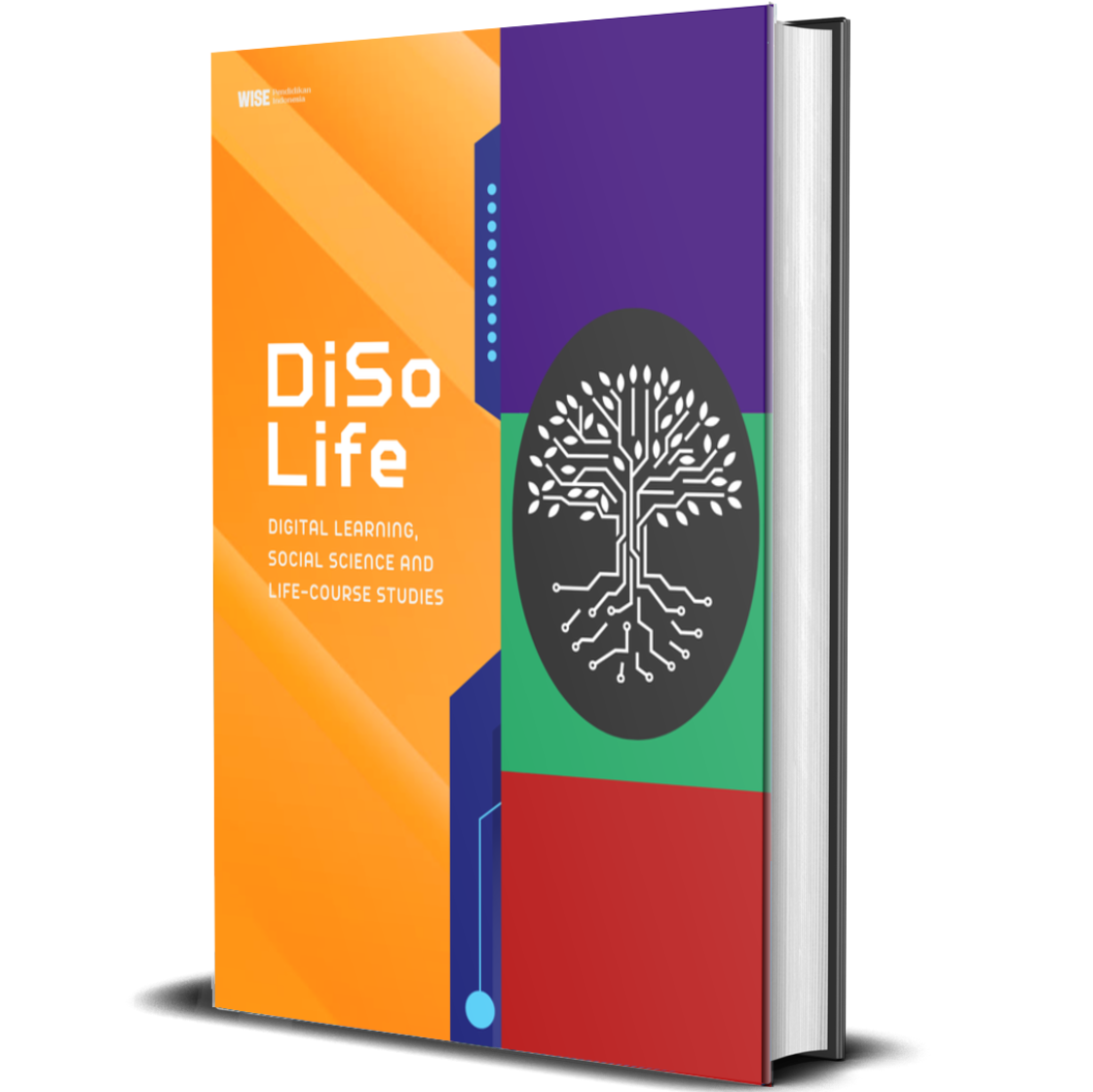

Digital Learning, Social Science, and Life-course Studies
| Journal Title | Digital Learning, Social Science, and Life-course Studies | |
| Initial | DiSoLife | |
| Abbreviation | Dig. Soc. Life. | |
| Frequency | 2 Issues per year (June and December) | |
| DOI | prefix10.70211/disolife by Crossref | |
| Online ISSN | 3109-8096 | |
| Editor-in-Chief | Dr. Ardian Asyhari, M. Pd | |
| Publisher | WISE Pendidikan Indonesia | |
| Institution | WISE Pendidikan Indonesia collaborates with Universitas Islam Negeri Raden Intan Lampung |
Digital Learning, Social Science, and Life-course Studies (DiSoLife) is a peer-reviewed scientific journal dedicated to publishing high-quality research in the fields of digital learning, social sciences, and life-course studies. The journal provides an open-access platform, ensuring all articles are freely available online without requiring a subscription.
The journal explores issues such as technology in education, digital inclusion, social science methodologies, and the impacts of societal change on various demographic groups. It emphasizes studies that integrate technological advancements with societal needs and educational reforms, providing valuable insights for policymakers, researchers, and educators.
For more details, visit the Focus and Scope section of the journal.
Current Issue: Vol. 1 No. 2 (2025): December 2025
Description
Issue Vol. 1 No. 2 (2025) of the Digital Learning, Social Science, and Life-course Studies journal features research from 19 authors across 9 institutions in Indonesia, Namibia, Senegal, Morocco, Algeria, Oman, Uzbekistan, India, and Thailand. This issue highlights timely themes at the intersection of digital education, social science, and life-course perspectives, including online disinhibition and parasocial bonds among adolescents, the dynamics of teaching strategies in English and mathematics classrooms, the development of character-based animated learning media using Animaker in Indonesian junior high school social studies, and qualitative explorations of digital learning trajectories in biology education across the life course, with a focus on learners’ transitions and meaning-making. Collectively, the articles offer relevant insights into how digital innovation and pedagogical practice can strengthen learning and support social development across the life course.